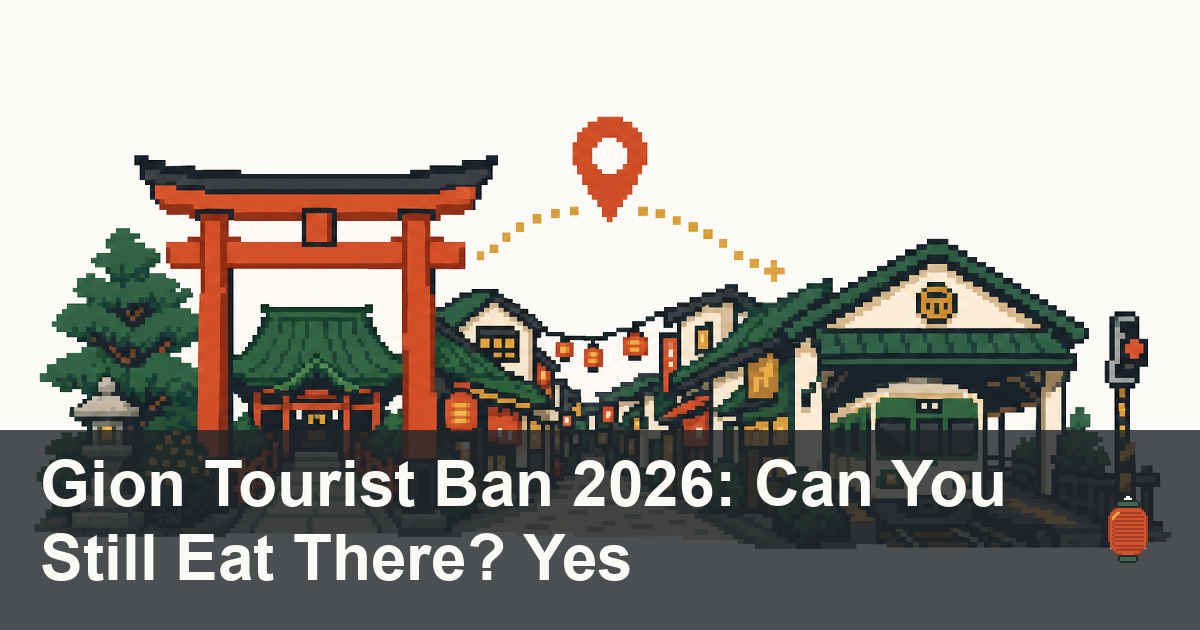
Let me kill the panic in one sentence: yes, you can still eat in Gion. The headlines about a ¥10,000 fine are real, but they are about people wandering and photographing on private alleys — not about diners walking to a restaurant or teahouse they actually booked.
I’m Reo, and I build dining tools for travelers in Japan from my desk in Tokyo. When the Gion restrictions hit the news, my inbox filled with the same fear: “We have a kaiseki reservation in Gion — are we going to get fined or turned away?” Short answer: no. Let me show you the actual map of what’s restricted versus open, how to behave so you’re never the problem, and how to lock in a Gion dinner as a foreigner without a Kyoto address book.
 Mia
Mia Yuki
Yuki Mia
Mia YukiMia
 Yuki
Yuki Mia
Mia Yuki
YukiWhat’s actually restricted vs. open in Gion
Here’s the part nobody puts plainly. Gion is not one zone with one rule. There are public streets (open to everyone) and private alleys (restricted). Knowing the difference is the whole game.
| Situation | Allowed? | Your move |
|---|---|---|
| Walking Hanamikoji main street (the famous public stretch) or Shijo-dori | Yes | Walk it, enjoy it. This is public road — the ban does not touch it. |
| Stepping into a private alley (e.g. Kosode-koji) just to sightsee or browse | No | Don’t enter. Signs warn of a ¥10,000 trespass penalty. Stay on the public streets. |
| Taking a photo on a private alley / photographing a geiko or maiko without permission | No | Never. Separate ¥10,000 photography fine since 2019. No “just one quick shot.” |
| Walking down a restricted lane to a restaurant or teahouse you booked | Yes | Go — you’re a customer. Keep your booking confirmation on your phone in case anyone asks. |
| Wandering private lanes hoping to find a walk-in spot | No | Don’t. With no booking you have no reason to be on a private lane. Book first, then go. |
| Photographing the public main street, scenery, no people targeted | Yes | Fine on public streets. Still, be discreet and never corner a performer. |
Sourced from the residents’ association signage and reporting by SoraNews24, Time Out, and Japan Today (March–May 2024). The restriction took effect April 2024; the first physical no-entry sign went up at Kosode-koji on May 29, 2024. As of 2026 these rules remain in force. Always check current local notices on arrival — enforcement and signage are managed locally and can be updated.
Why the distinction exists
The problem was never people eating dinner. It was crowds treating residents’ private lanes as a theme park and “maiko paparazzi” cornering teenage apprentices (some 16–17 years old) for photos. The city and the Gion district association drew a line: public streets stay open, private property gets protected. Diners with a legitimate booking were never the target.
How to book Gion dining as a foreigner
This is where the real friction is — and it has nothing to do with the ban. Many of Gion’s best kaiseki counters and ochaya (teahouses) operate on an introduction-only (ichigen-san okotowari) basis: you need an existing customer, a hotel concierge, or a trusted intermediary to vouch for you. Others simply don’t take phone or email bookings from overseas numbers. Here’s how to get in anyway.
- Use your hotel concierge first. A good Kyoto ryokan or luxury hotel has standing relationships with Gion restaurants. This is the most reliable route into intro-only and teahouse experiences. Ask the moment you book the room, not the day of.
- Book reservation-friendly kaiseki directly. Plenty of excellent Gion restaurants do take foreign reservations through online platforms or email. The trick is knowing which ones and confirming they accept overseas guests before you build your evening around them. We break down the working routes in our Kyoto restaurant reservations guide for tourists.
- Carry your confirmation. If your restaurant sits on a restricted lane, screenshot the booking. You almost certainly won’t be asked — but it removes any doubt about why you’re there.
- Have a backup. Gion counters are small and cancel-sensitive. Line up a second option just outside the restricted zone (more on that below).
If you’ve already hit the wall where a Kyoto or Tokyo restaurant simply won’t take a booking from an overseas guest, you’re not imagining it — it’s a known pattern. We wrote about exactly why and how to get around it in when a Tokyo restaurant won’t take your reservation from overseas, and the general playbook lives in our restaurant reservations in Japan for foreigners guide.
Mia YukiMia
Worthwhile dining just outside the restricted zone
You don’t have to be on a private Gion alley to eat brilliantly in the neighborhood. Aim for these areas — all walkable, all without the private-lane sensitivity:
- Pontocho. A narrow riverside lane just across the Kamo River, packed with everything from kaiseki to yakitori, many with kawayuka (summer riverside terraces). Far more reservation-friendly than intro-only Gion teahouses.
- Kiyamachi & Kawaramachi. The busy dining belt west of Pontocho — izakaya, sushi, and modern Kyoto cuisine that actively welcome foreign guests.
- Gion-Shijo frontage. Restaurants facing the public main streets of Gion itself. You get the atmosphere and the address without ever stepping onto a restricted lane.
- Higashiyama, slightly north. Toward Yasaka Shrine and Maruyama Park there are excellent obanzai and tofu kaiseki spots in a calmer, fully open setting.
My honest take: book one special Gion-area meal in advance, and keep one of these zones as your flexible, walk-up-friendly backup. That combination gives you the magic without the stress.
How to behave so you’re never the problem
The rules are simple once you internalize the spirit of them:
- Stay on public streets unless you have a booking on a private lane.
- Never photograph geiko or maiko without explicit permission — no chasing, no blocking, no “one quick photo.”
- Don’t eat or drink while walking through residential lanes.
- Keep your voice down. People live here.
Do these four things and you’re a welcome guest, not a headline.
FAQ
Can I still eat at a restaurant in Gion in 2026?
Yes. The restriction limits foot traffic on certain private alleys to residents, staff, and customers of the establishments there. If you have a genuine reservation, you’re a customer and you can walk to your restaurant or teahouse. The public main streets like Hanamikoji and Shijo-dori remain fully open. (Per residents’ association signage and 2024 reporting from SoraNews24, Time Out, and Japan Today.)
Will I really be fined ¥10,000 in Gion?
The risk applies to specific behavior: entering posted private alleys without reason, and photographing geiko or maiko without permission (a separate rule from 2019). Both carry a stated ¥10,000 penalty. A tourist walking the public streets or heading to a booked restaurant is not the target. Don’t trespass on marked private lanes and don’t take unsolicited photos of performers, and you have nothing to worry about.
Which streets in Gion are off-limits?
The restriction covers the district’s private alleys — the narrow residential lanes, with Kosode-koji being the first to get a posted no-entry sign (May 29, 2024). The public thoroughfares, including the famous Hanamikoji main street and Shijo-dori, stay open to everyone. When in doubt, stay on the wide public streets and only enter a narrow lane if you have a booking there.
How do I book a Gion restaurant if I live overseas?
Three reliable routes: ask your Kyoto hotel concierge (best for intro-only kaiseki and teahouses), book reservation-friendly Gion restaurants directly through platforms that accept foreign guests, and keep a backup just outside the zone in Pontocho or Kiyamachi. Many top counters are introduction-only or won’t take overseas bookings, so start early. Our Kyoto reservations guide walks through which routes actually work.
YukiSource/method note: This article uses OnlyLocal traveler-friction checks and cross-checks Kyoto dining behavior against Japan National Tourism Organization food etiquette guidance.


Comments